Getting quality sleep is something a lot of people struggle with. We've all heard we should aim for about eight hours each night, but many of us miss the mark. Maybe you have trouble falling asleep, wake up several times throughout the night, or find yourself staring at the ceiling at 3 a.m. wondering why you can't drift back to sleep.
Sleep isn't just about feeling rested the next day, it's when your body does the majority of its healing and recovery. When you're consistently missing out on quality sleep, your body doesn't get the chance to repair itself the way it was designed to. Over time, poor sleep can contribute to chronic fatigue, slower recovery from exercise,headaches, joint pain, skin issues, weakened immunity, hormone imbalances, and difficulty managing stress.
One of the biggest reasons so many people struggle with sleep today is that our bodies are no longer in sync with our natural circadian rhythm.
Your circadian rhythm is your body's internal clock. It's influenced primarily by the natural cycle of light and darkness created by the rising and setting sun. For thousands of years, humans lived without light bulbs, televisions, or cell phones. Our bodies evolved to wake with the sun and wind down after sunset. While technology has changed rapidly, our biology hasn't changed nearly as fast.
Whenever light hits your eyes—whether it's sunlight, your phone, your TV, or bright fluorescent lights—your brain interprets it as daytime. In response, your body produces cortisol, your primary stress hormone. Cortisol isn't a bad thing; it's what helps wake you up, gives you energy, and prepares you for the day ahead.
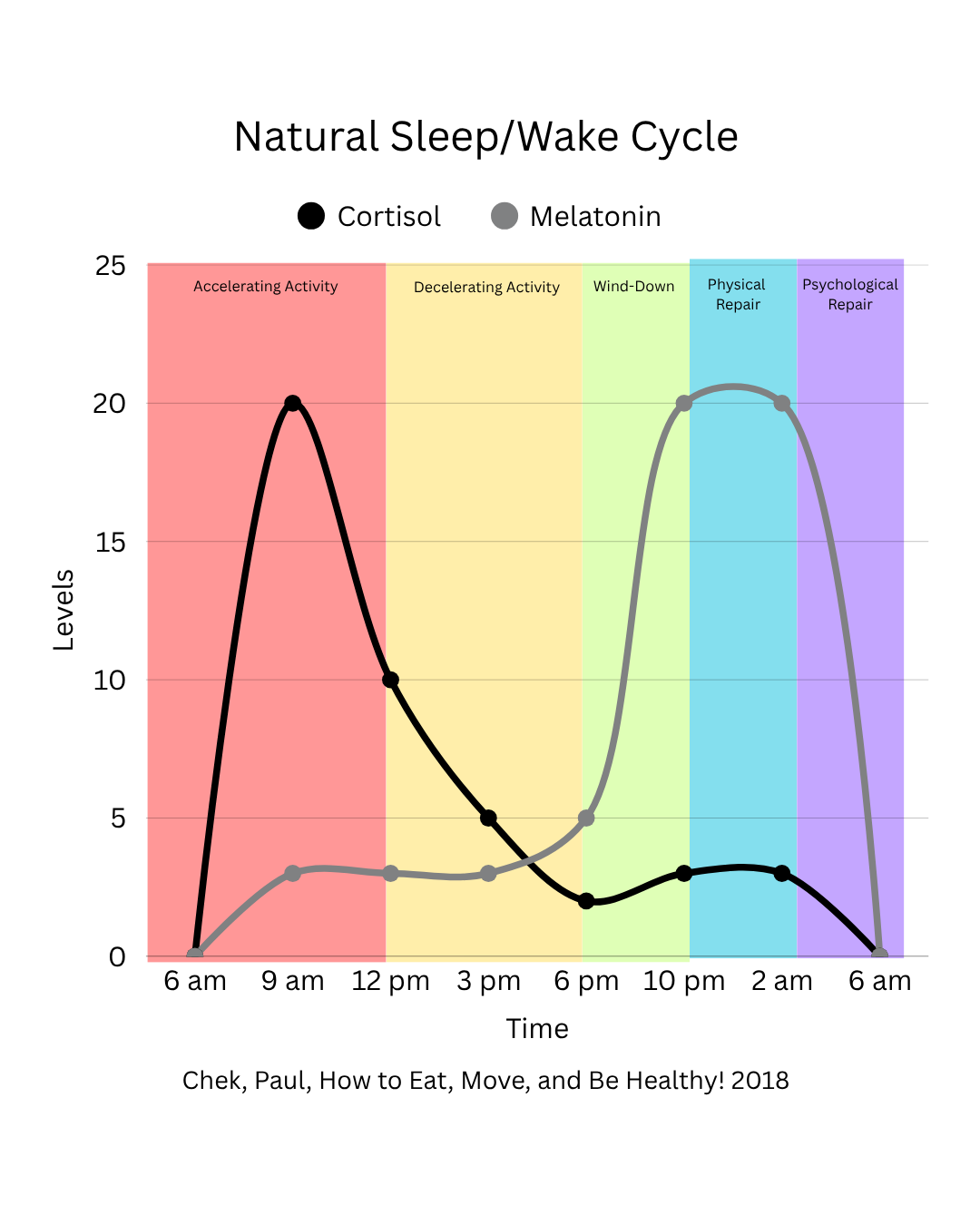
Normally, cortisol rises in the morning, peaks between about 6:00 and 9:00 a.m., and then gradually declines throughout the day. As evening approaches and light decreases, cortisol continues to fall, allowing melatonin to increase. Melatonin helps you feel sleepy and signals your body that it's time to rest and repair.
The body's most important physical recovery occurs during the early part of the night (from 10pm-2am) while later sleep supports brain function, memory, and mental recovery (2am-6am). That's one reason consistently staying up late may not provide the same restorative benefits as getting to bed earlier—even if you sleep the same total number of hours.
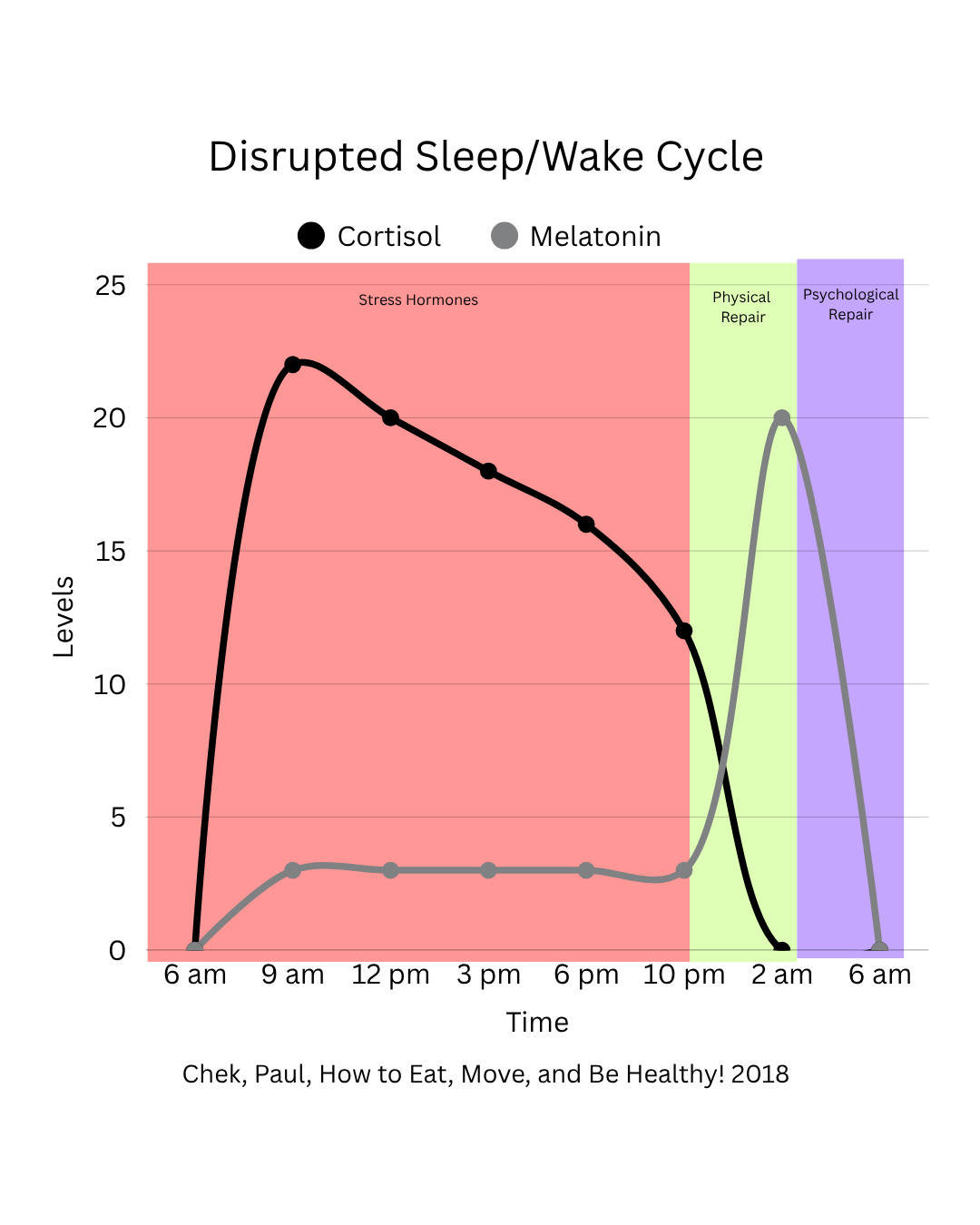
Unfortunately, cortisol doesn't disappear the moment you turn off the lights. It can remain elevated for hours.Bright lights, scrolling on your phone, late-night TV, caffeine, and other stimulants can all delay your body's natural release of melatonin, making it harder to fall asleep and reducing the quality of your sleep.
The good news is that your body loves routine. If you consistently go to bed around the same time each night,your body begins to anticipate it. Over time, it starts lowering cortisol and increasing melatonin in preparation for sleep, making it easier to fall asleep naturally. That's why maintaining a consistent bedtime is one of the most powerful habits for improving sleep.
Things That Can Disrupt Your Sleep-Wake Cycle
5 Tips to Optimize Your Sleep
1. Aim to be asleep by 10:30 p.m.
Give yourself enough time to unwind so you're actually asleep—not just getting into bed—around this time.
2. Dim the lights two hours before bed.
Reduce exposure to bright overhead lighting and screens. Instead, use lamps,warm-colored bulbs, or even candles to help signal to your brain that it's nighttime.
3. Make your bedroom as dark as possible.
Blackout curtains, an eye mask, or covering small LED lights can make a noticeable difference in your sleep quality.
4. Cut off caffeine after lunch.
Even if you don't feel like caffeine affects you, it can stay in your system for several hours and interfere with falling asleep or staying asleep.
5. Reduce electronics in your bedroom.
If possible, unplug unnecessary devices and keep phones, tablets, and TVs out of the bedroom to create a calm, sleep-friendly environment.
Quality sleep isn't a luxury—it's one of the foundations of good health. Before reaching for another supplement or trying the latest health trend, take a look at your sleep habits. Small changes to your evening routine can have a huge impact on your energy, recovery, mood, and overall health.